

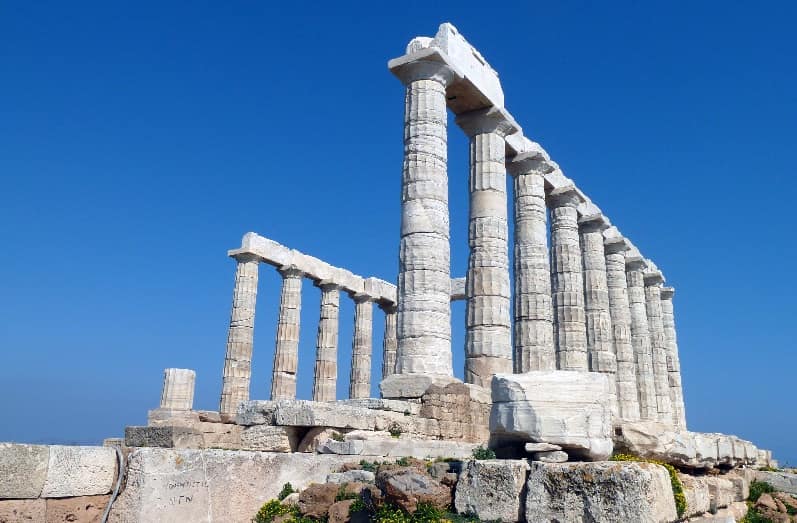
Sanctuary of Poseidon and Sanctuary of Athena at Sounion
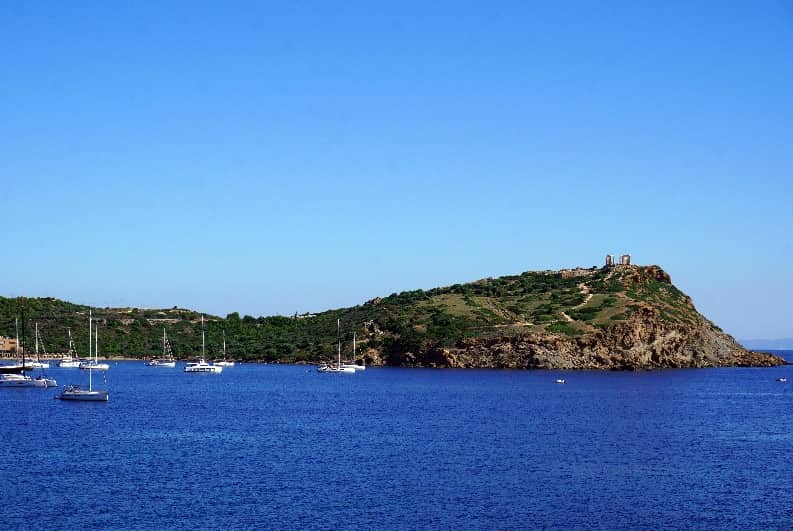
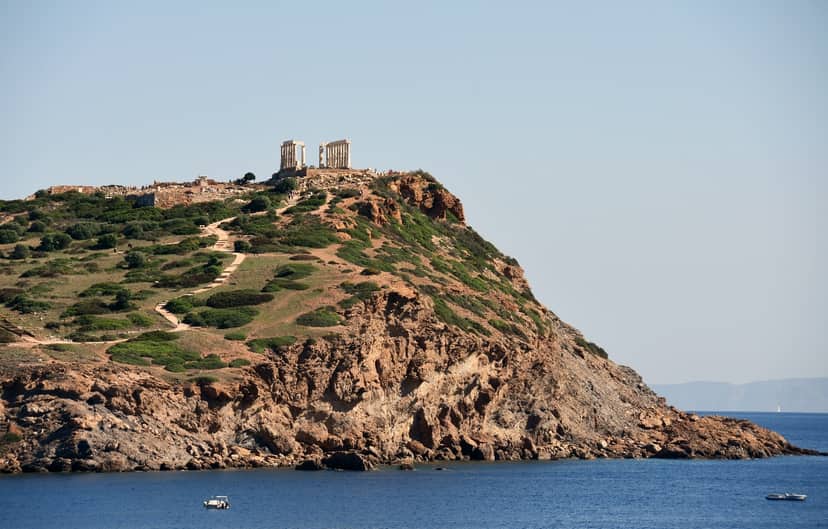
The sanctuaries of Poseidon and Athena are two of the most important monuments of the archaeological site of Sounio. Cape Sounion, at the southernmost tip of Attica, is an important strategic point. Through this peninsula, the city-state (polis) of Athens controlled the sea passage to the Aegean Sea and Piraeus, its central port, as well as the Lavrion peninsula with its rich silver mines, which played an important role in the rise of Athens as a leading power in the 5th century BC.
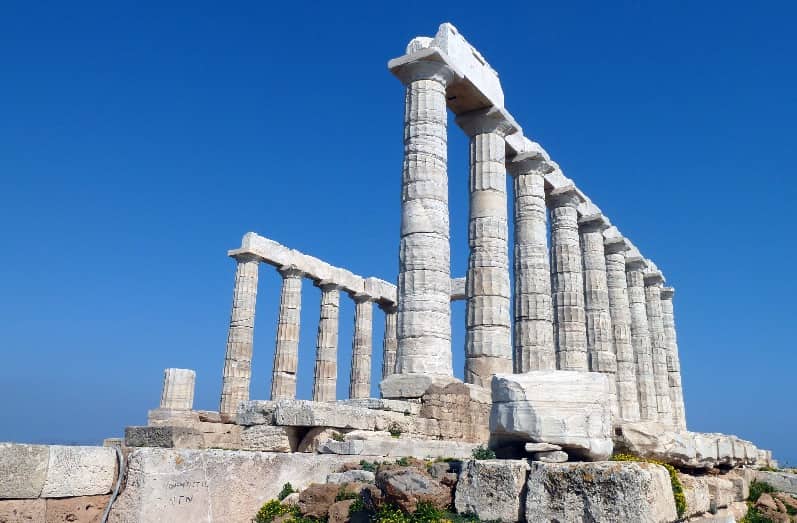
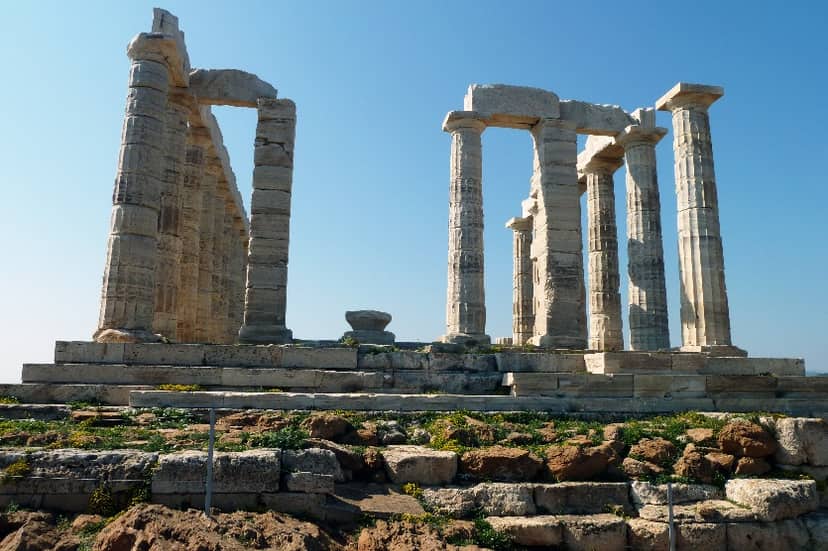
The sacred precinct of Poseidon, which occupies the highest part of the fortress, is surrounded by a wall, except for its steep southern side, and covers an area of about 5000 square metres. It was entered through a monumental gate to the north-east. The most important building is the Temple of Poseidon, in the southern part, while the NW part is occupied by the large northern portico and the smaller western one.
The present Doric temple was built on the ruins of the archaic temple using local marble from the Agrileza quarries. Palmette antefixes crowned the gabled roof. At least the eastern pediment (on the entrance side) was decorated with statues. On the same side, a relief frieze ran along the top of the interior colonnade. The Parian marble frieze panels depict scenes from the Battle of the Centaurs and the deeds of Theseus, an allegory of the victory of the Greeks, led by the Athenians, over the Persians and the superiority of Athenian democracy over the Eastern monarchy. The temple is attributed to the same architect as those of Hephaistos (“Thission”) in the Athenian Agora, Ares in Acharnes and Nemesis in Ramnous.
THE SANCTUARY OF ATHENA AT SOUNION
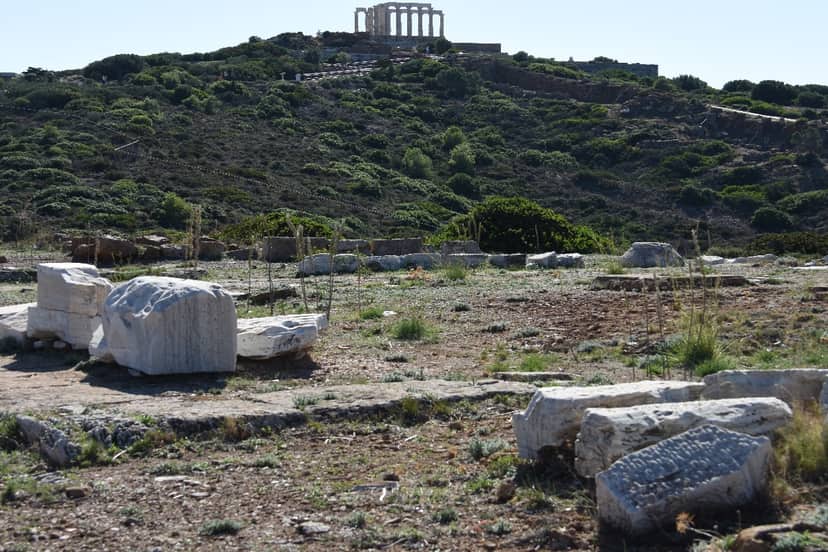
The top of a low hill about 400 m to the NE of the sanctuary of Poseidon is occupied by the sanctuary of Athena. A trapezoid enclosure of limestone (about 46.50X44 m) runs around the flattened top of the hill and defines the sanctuary with the temple of Athena, the small temple and the depositor. To the north is an older sanctuary called the “Phrontis”. The temples of the sanctuary were deconstructed, as usually practiced in the roman period with the abandoned temples in the periphery, and transported to adorn the Athenian Agora.
In the temple of Athena, the cella was bordered by a colonnade only on the east and south sides. The marble columns were not fluted and had Ionic capitals. At the back of the cella, the foundations of the base of the cult statue have been preserved. The altar is located to the south of the temple, apparently because the large plateau to the south was suitable for the gathering of worshippers and the offering of sacrifices. The temple was built around the middle of the 5th century BC. According to another view, it predated the Persian wars and only the exterior colonnades were added.
In the SE area of the sanctuary there is a wide trench, 15 m deep, accessible by 15 hewn steps. Its original use remains unclear. Later, probably after the Persian Wars, the ancient offerings were deposited in it. They date from the 9th to the middle of the 5th century BC, when the trench was covered.
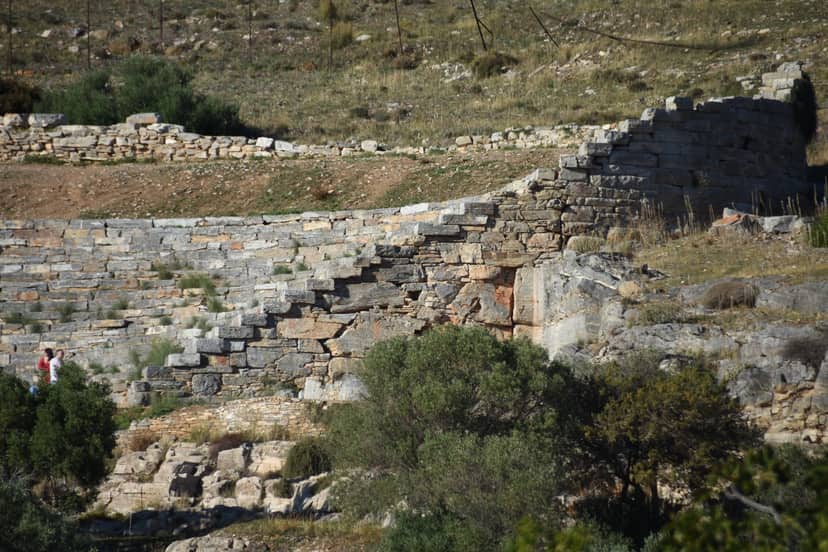
In the NW part, an almost circular wall of roughly hewn large stones defines a precinct older than that of Athena. In the precinct, apparently a sacred grove, a hero was worshipped, probably Phrontis, the helmsman of Menelaus’ ship on the return from Troy to Sparta, who died and was buried at Sounion (Odyssey, c. 276-285). The ancient precinct and the depot with the oldest finds are evidence of a very ancient cult that began in the area of the sanctuary of Athena.
The sanctuaries of Poseidon and Athena are two of the most important monuments of the archaeological site of Sounio. Cape Sounion, at the southernmost tip of Attica, is an important strategic point. Through this peninsula, the city-state (polis) of Athens controlled the sea passage to the Aegean Sea and Piraeus, its central port, as well as the Lavrion peninsula with its rich silver mines, which played an important role in the rise of Athens as a leading power in the 5th century BC. The sacred precinct of Poseidon, which occupies the highest part of the fortress, is surrounded by a wall, e…
On the map
Experience Attica
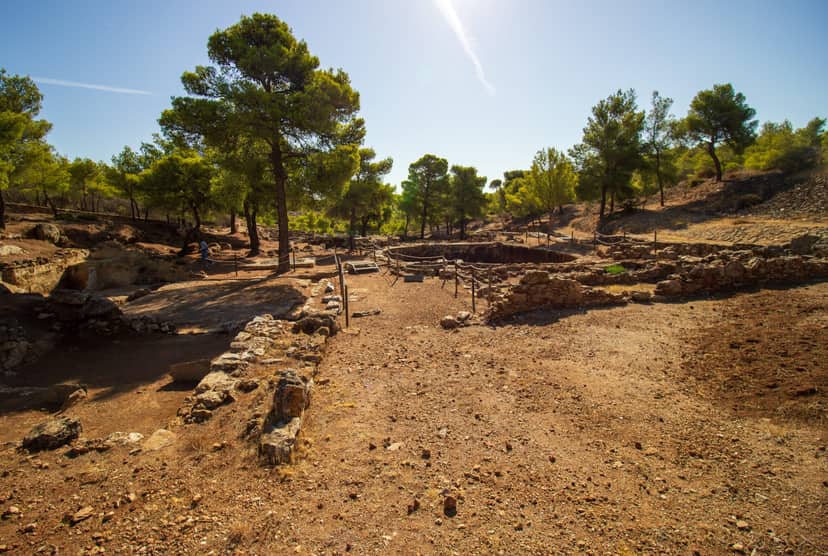
Ancient Mining Straits of Thorikos
At the foothills of the Mycenaean Acropolis of Thorikos, which supervises the natural harbor of Lavrion, a complex network of…