About Attica
Attica’s History
Steeped in culture and myth through the ages, it’s easy to see how Attica & Athens became the heart of the civilised world. Their rich history is very much evident today as you take in the sights and sounds of Athens, one of the many key cities in the region. No other area can lay claim to so many historical events and important cities as Attica. Indeed, it is in cities such as Eleusis, Megara, and Marathon that democracy, philosophy, and poetry -all Greek words, by the way, originated.
War was also commonplace, and it was at Salamis and Plataies that the fate of the free world was determined when the Athenians met the Persians and emerged victorious. Having inspired many Hollywood blockbusters – including 300, the epic about the Battle of the Hot Gates and its prequel Xerxes – this era of Greek history cannot but spark interest.
The Athenians fought Darius and his invading forces without the help of Spartan reinforcements. The Persian defeat was so decisive that no further attempts were made to invade Greece for many years. Miltiades’ brilliant strategy at the battle known as The Battle of Marathon, is still the foundation of a great deal of modern warfare.
The Battle of Salamis, which preceded Plataies, was fought between the Persian fleet and the Greek navy. More than 300 Persian vessels were sunk or captured as a result of the Athenian ambush on the formidable Persian force in the Straits of Salamis. As with the famous story of the 300 Spartans, the few beat the many and the strategy of the Athenian general Themistocles proved effective.
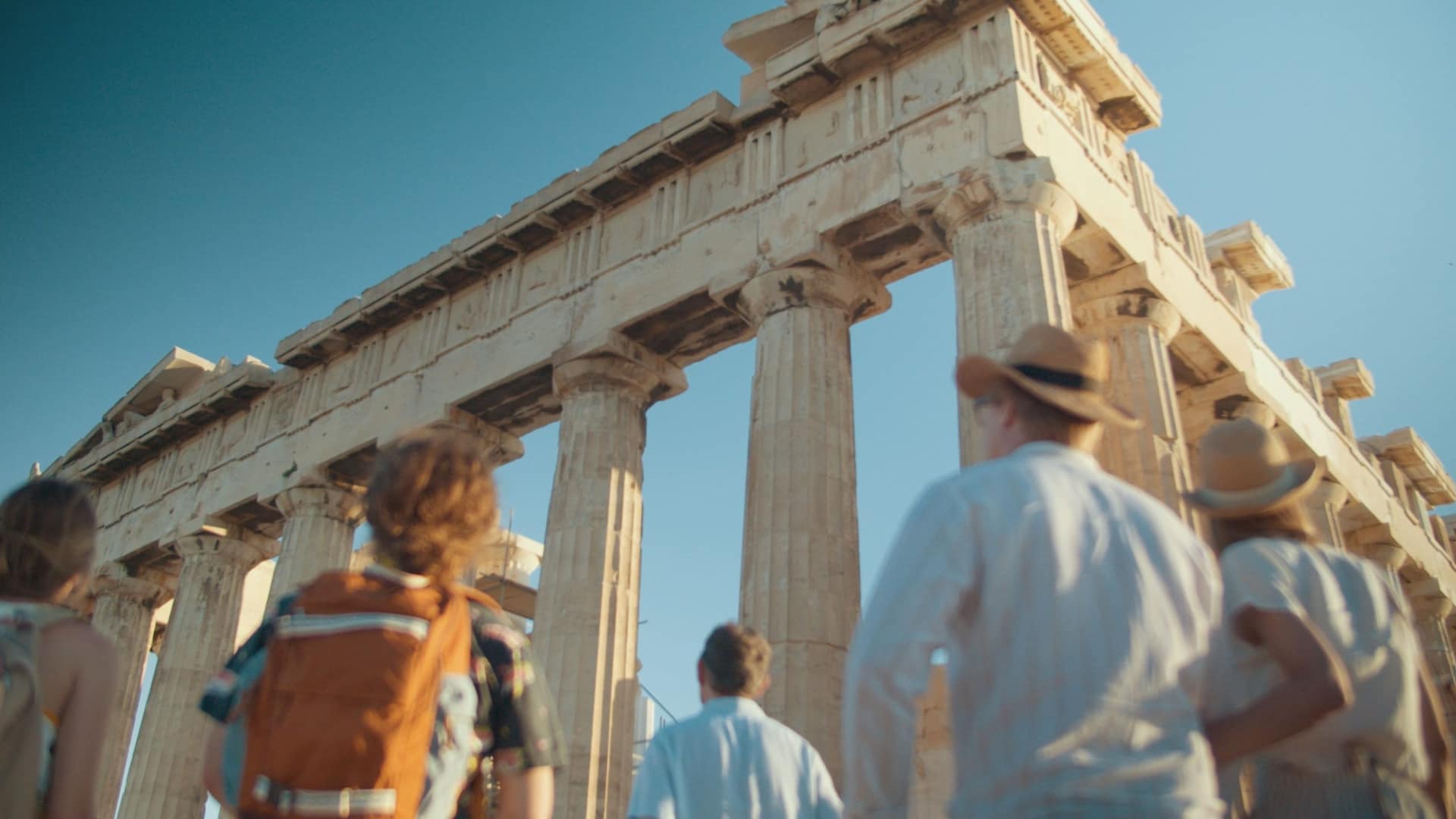
Every step made and every stone turned depicts a conflict between Gods and humans, Greeks and invaders, or Athenians and other Greeks. In its history, one can also see giant leaps forward for the sciences, literature, and the arts, all rooted in Attica, which was once united under the command of King Theseus. Although Attica’s architecture is impressive, its buildings are overshadowed by the Acropolis, the ancient citadel that became the foundation of the civilised world and still rules the skyline to this day.
Attica, the land of a thousand archaeological sites
Archaeological digs in the region of Attica have been going on for hundreds of years, until 1837, following the Greek War of Independence from the Turks. However, many of the most recent archaeological finds in Athens were uncovered not by a mild-mannered archaeologist with a careful brush, but by a steel monster with sharp teeth. The tunnel boring machine ("metropontikas"), is a mechanical excavator that came across a lot of important pieces of history while grinding rock all over Attica for the new Athens Metro network; so many that there is now a small museum in almost every Metro station.
Thanks to the Greek traveller and geographer Pausanias, who documented most of the secular buildings in the second century AD, many of Attica’s historical antiquities have been saved from the ravishes of time and now fill the numerous museums in the region. The first was the National Archeological Museum, founded by Governor Ioannis Kapodistrias.
Today, one can spend a whole day at the brand-new Acropolis Museum to be transported to the golden era of Athens and become a part of its glory.
Kerameikos
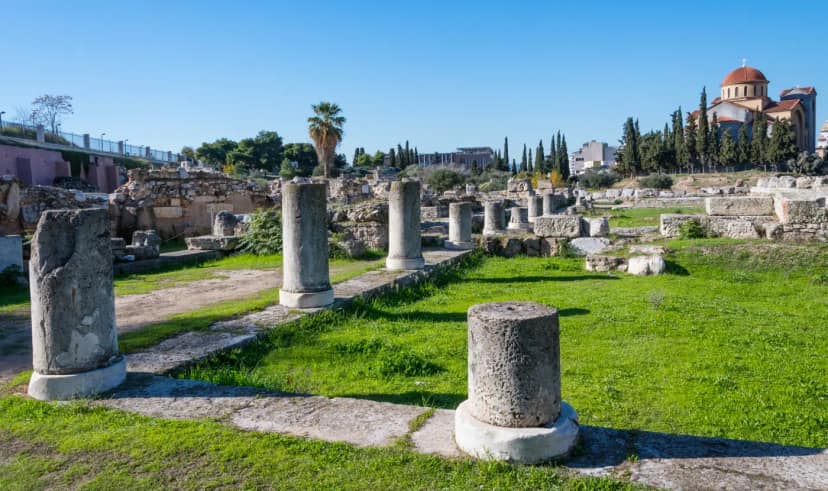
Located at the end of Ermou Street, the Kerameikos Archaeological Site is one of the major archaeological sites in Athens. And though only a small portion of this ancient city quarter is open to the public, this site, home to the “Kerameis” (the potters) of antiquity, is a powerful and moving glimpse into the distant past. Also standing here are the ruins of the Dipylon Gate, the imposing double gates of the Themistocleian city wall, circa 478 B.C. numerous tombs with “replicated anaglyphs” occupy the site as well, the original anaglyphs being safely preserved in the Kerameikos Museum, also located here. The notorious Dimosio Sima, the public graveyard where ancient Athenians once buried their war heroes, is also part of this intriguing site. It is believed that Kerameikos took its name from one of two sources: the ancient kerameis, potters whose workshops occupied the area, or from the name of the Greek hero, Keramos. The imposing gates were first brought down by Syllas during his conquest of Athens in 86 B.C., and the final destruction took place during the Herulian sack of Athens in 267 A.C. thereafter, the area was used as a graveyard until the end of the Roman era in the 6th century.
Testimonials
What did the world say