

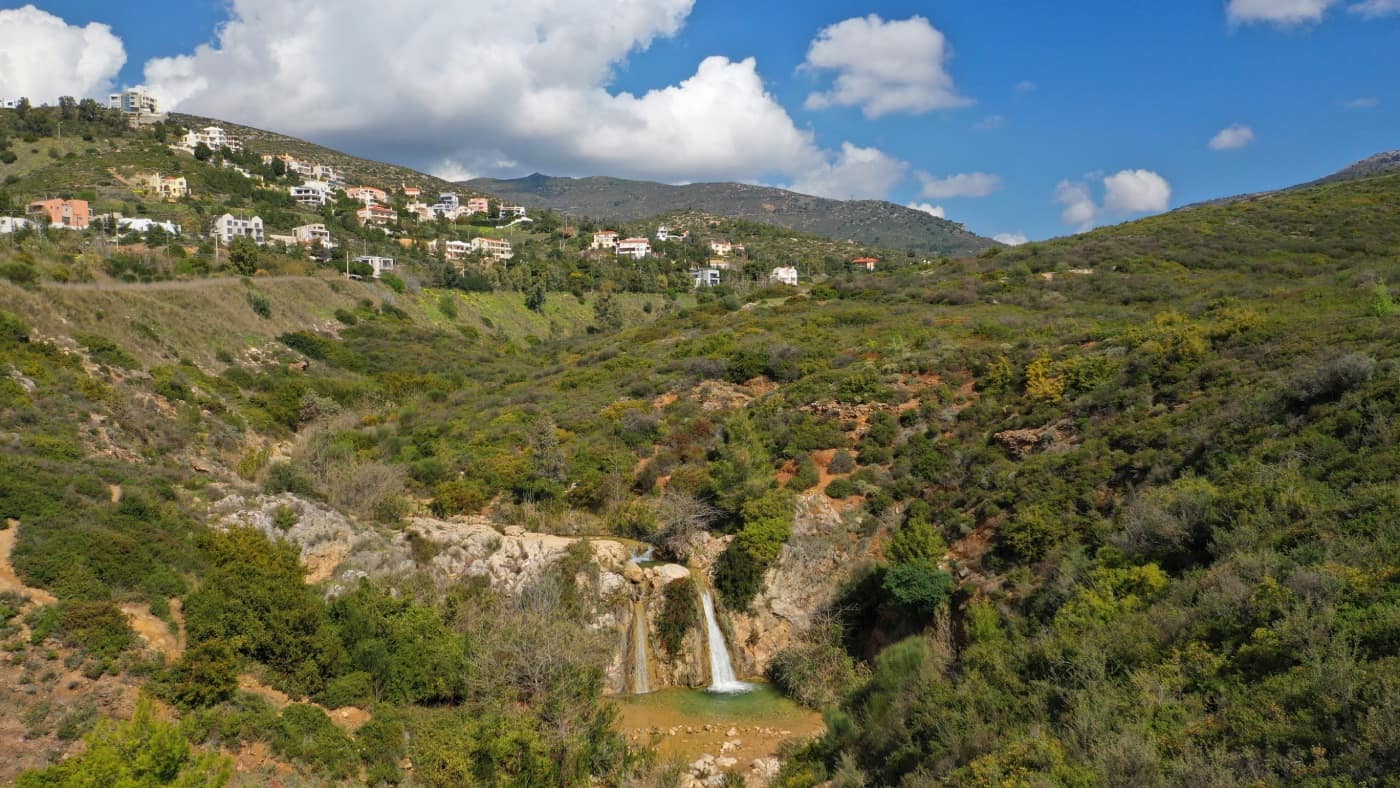
Mount Pentelicus
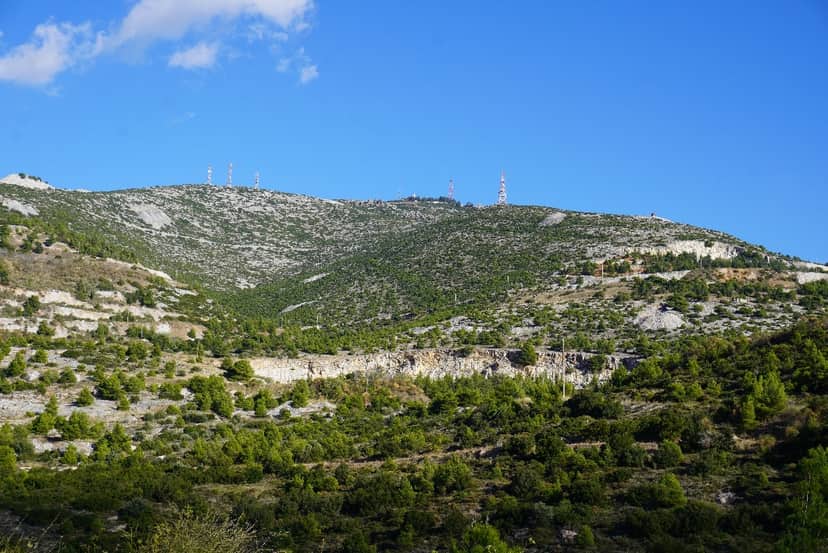
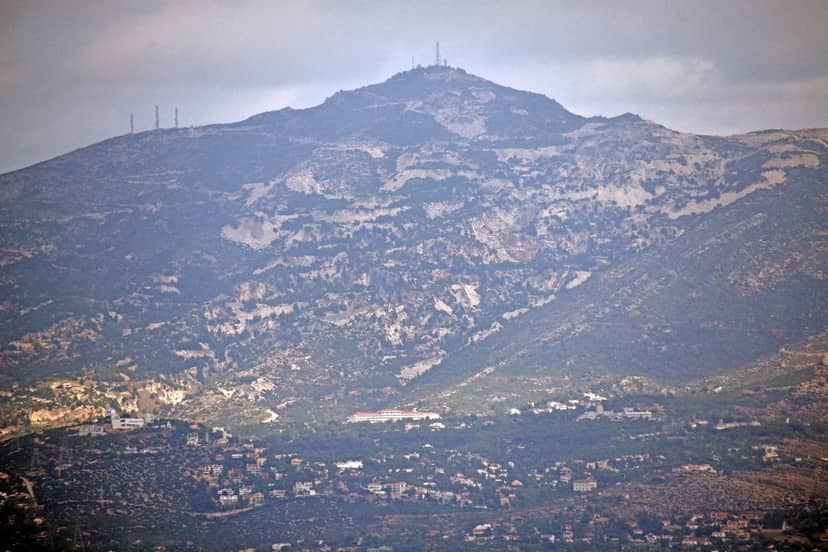
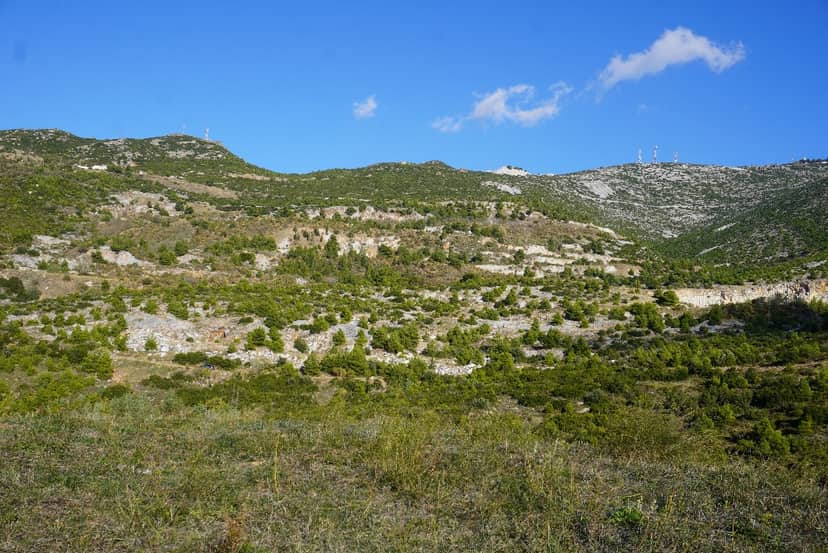
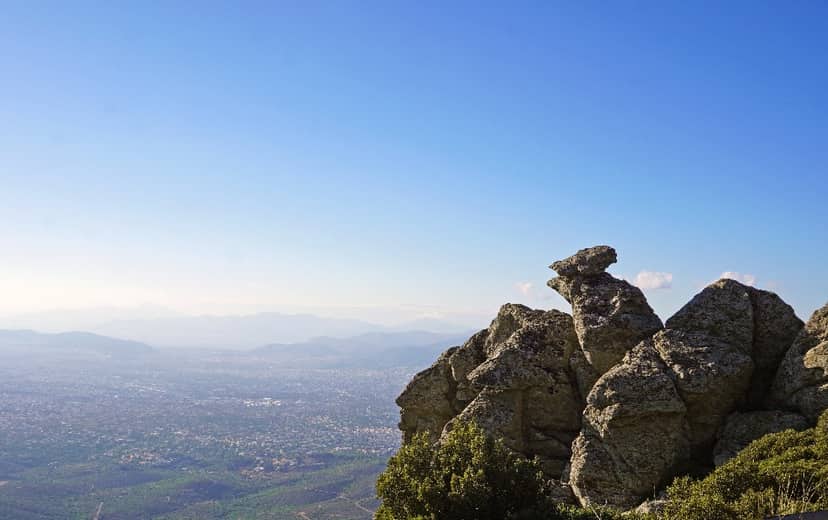
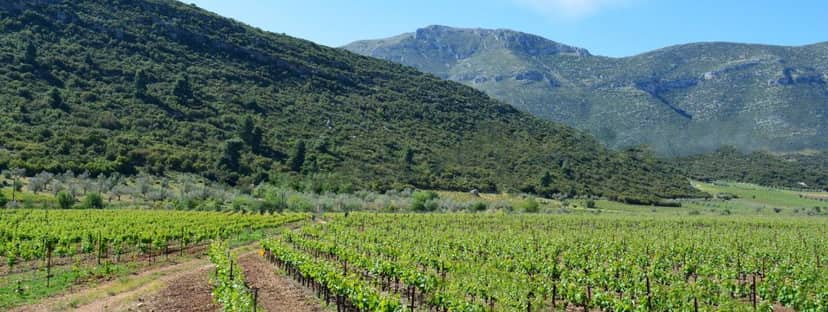
The protected area (CORINE) of Mount Pentelicus, or Mount Pentelikon or Mount Penteli, extends at 6959 hectares and has a total perimeter (km) of 53.9, a maximum elevation (m) of 1108.0 and a minimum elevation (m) of 100.0. The historic Mount Pentelicus or Pentelikon, although it has been degraded as a habitat due to constant fires, it remains a peri-urban refuge of an impressive biodiversity considering the size and the condition of the mountain. Penteli rises like a pyramid in the north-east of Attica and together with the mountains Parnitha, Hymettus and Aegaleo embraces the basin of Athens. Its peak, Pyrgari, reaches 1,108 meters, while it is surrounded by many small hills, such as Pyriza, Agios Panteleimon, Kastri, Vigla, Koufos and Dionysovouni. To the west lies the basin of Athens, to the northeast stretches the plain of Marathon, to the south lies the valley of Mesogaia, while to the east the foothills of the mountain fade slowly into the sea and the Gulf of Petalia.
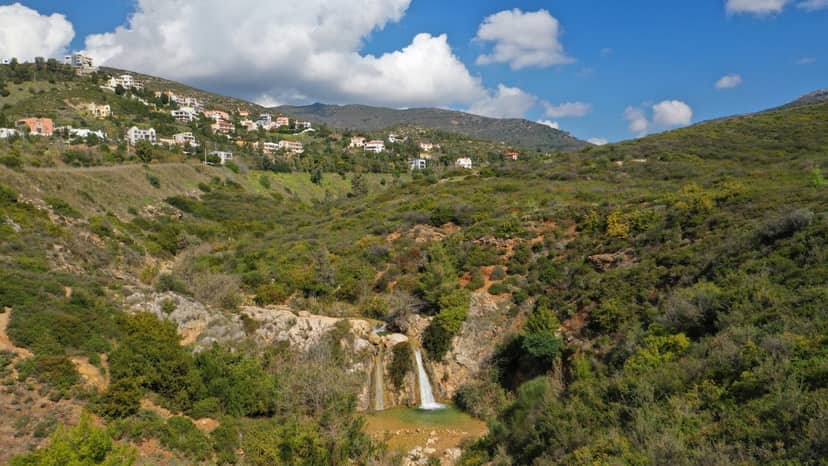
The mountain was originally called Vrilissos and has remained in history because of the world-famous Pentelic marble with which the Athenians during the time of Pericles built the Acropolis. One of the ancient quarries was located in the southwest of the mountain in the cave of Amomos, or the well-known Davelis cave, as it is called nowadays. From here began the famous “Lithagogias Road” through which workers transported the large volumes of marble from Penteli to the rock of the Acropolis. Penteli differs geologically from the rest of the Limestone Mountains of Athens as large parts of the mountain are composed of slate and marble, rocks that hold the rainwater on the surface resulting in the presence of many springs and small streams. The most important of these are the stream of Chalandri, Valanaris, Vathia Chouni, the stream of Rapentosa and the stream of Kokkinaras.
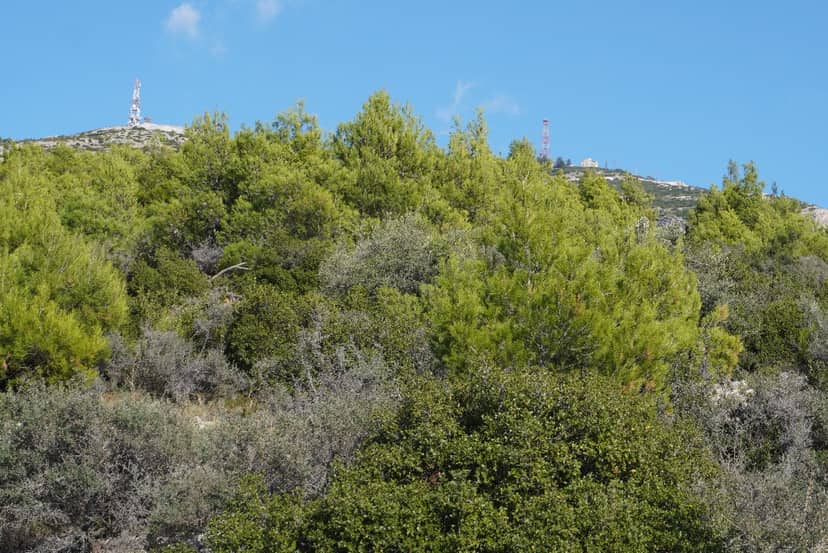
Although it is the most “damaged” mountain in our country, both from the almost annual large fires and from arbitrary construction, it is still home to a large number of plants and animals of the Attican land. More than 1,100 species of plants still grow in Penteli. The mountain was famous in the past for its dense forests which have now been completely lost. The vegetation of the mountain includes mainly Pinus halepensis (Aleppo pine), plane trees, poplars, oaks, wild cypresses, Greek strawberry trees, strawberry trees, wild olives, myrtles, oleanders, mastic trees, heathers, Spanish broom, etc., which now appear scattered, while only the kermes oaks create more compact areas. A local endemic species, Verbascum pentelicum, has been recorded on the mountain.
Important species of mount Pentelicus are: Asperula pulvinaris, Sideritis raeseri subsp attica, Silene oligantha subsp parnesia and Silene pentelica, Onobrychis alba subsp pentelica, Centaurea attica subsp pentelica, Erysimum boryanum, Fritillaria obliqua subsp obliqua, Erysimum atticum, bellflower Campanula celsii subsp celsii, carnation Dianthus serratifolius subsp serratifolius, Cephalaria flava subsp setulifera, wild garlic Allium hymettium, Aristolochia microstoma, Onosma kaheirei, Filago aegaea subsp aristata, colchicum Colchicum atticum and Consolida tenuissima. Other interesting species of the area are Anthemis cretica subsp tenuiloba, Viola alba subsp dehnhardtii, Aethionema saxatile subsp graecum, Minuartia attica subsp attica, Draba lasiocarpa, Crocus nivalis, Crocus cartwrightianus and Crocus laevigatus, Cerastium candidissimum, Iberis carnosa subsp carnosa, Attic iris Iris attica, Clematis cirrhosa, Alyssum simulans, Onopordum caulescens, Aubrieta deltoidea, Onosma frutescens, Helianthemum hymettium, Tragopogon porrifolius subsp eriospermus, Brassica cretica subsp aegaea, Globularia alypum, Fritillaria graeca, Ebenus sibthorpii and Ornithogalum atticum. In Penteli you can also find many kinds of orchids.
The avifauna of the area is limited, with about 80 species having been observed, as continuous fires have driven out many birds that were once common in the area. However, raptors still live in Penteli, such as short-toed snake eagles, common buzzards, peregrine falcons, sparrowhawks and common kestrels, while during migration pallid harriers, Montagu's harriers and Eleonora's falcons arrive here. Among the nocturnal raptors, eagle owls, barn owls, tawny owls, little owls and scops owls can be heard here. Chukar partridges are common and the avifauna is complemented by species such as turtle doves, nightjars, hoopoes, robins, wrens, dunnocks, woodlarks, crested larks, thrushes, stonechats, black redstarts, black-eared wheatears, blue rock thrushes, subalpine warblers, blackcaps, Sardinian warblers, red-backed shrikes, woodchat shrikes, western rock nuthatches, golden orioles, starlings, jays, goldfinches, linnets, serins, hawfinches, cirl buntings, Cretzschmar's buntings and corn buntings. Among the amphibians, one still meets toads, Balkan frogs and Greek frogs in the mountain streams, while green toads are more common. Among the reptiles, the presence of the ocellated skink stands out, as well as species such as the marginated tortoise, the Mediterranean tortoise, the slow worm, the European glass lizard, the gecko, the Balkan green lizard, Erhard's wall lizard, the common wall lizard, the snake-eyed skink, the Caspian whipsnake, the four-lined snake, the Balkan whip snake, the Montpellier snake, the grass snake, Dahl's whip snake, the cat snake, the leopard snake and the viper. Of the mammals, foxes still live in Penteli and in fact some of them often visit, through the streams, the surrounding urban areas. Other species are stone martens, weasels, hares and hedgehogs, while many bats also live in the caves. The reports of the old residents of Penteli who say that a few decades ago jackals lived in the area are noteworthy. Finally, it is important that an endemic cave cricket, the species Dolichopoda petrochilosi, lives in the cave of Davelis.
At the foot of Mount Penteli are the municipalities of Penteli and Nea Penteli, as well as suburbs of Athens such as Kifisia, Dionysos, Chalandri, Vrilissia, Melissia, Ekali and Drosia. In an evocative area of the mountain is the Holy Monastery of Penteli, founded in 1578. During the Turkish occupation, it was a spiritual center of Hellenism, while it houses a school and a library.
The scientific presence and educational programs of the National Observatory of Athens (Penteli Observatory), in Palaia Penteli, are important. In 1937, an astronomical station was installed in Penteli, where the Penteli Observatory was built in 1958, while an important monument of its recent history is also the Castle of Rododafni, palace of the Duchess of Plakentia.
The protected area (CORINE) of Mount Pentelicus, or Mount Pentelikon or Mount Penteli, extends at 6959 hectares and has a total perimeter (km) of 53.9, a maximum elevation (m) of 1108.0 and a minimum elevation (m) of 100.0. The historic Mount Pentelicus or Pentelikon, although it has been degraded as a habitat due to constant fires, it remains a peri-urban refuge of an impressive biodiversity considering the size and the condition of the mountain. Penteli rises like a pyramid in the north-east of Attica and together with the mountains Parnitha, Hymettus and Aegaleo embraces the basin of Ath…
On the map
Experience Attica
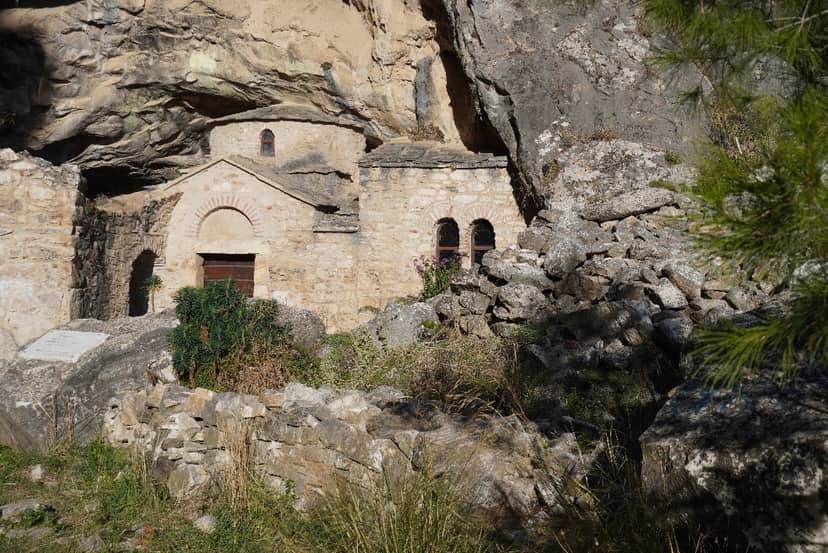
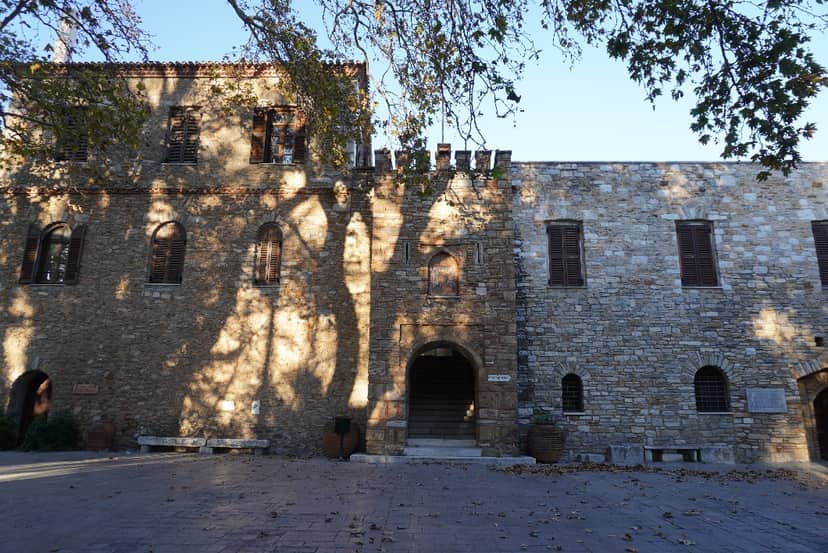
Holy Monastery of the Dormition of the Virgin Mary (Holy Monastery of Pendeli)
On the western slopes of Mount Pentelikos, in a position naturally protected by the height of Koufos, with the possibility of…