

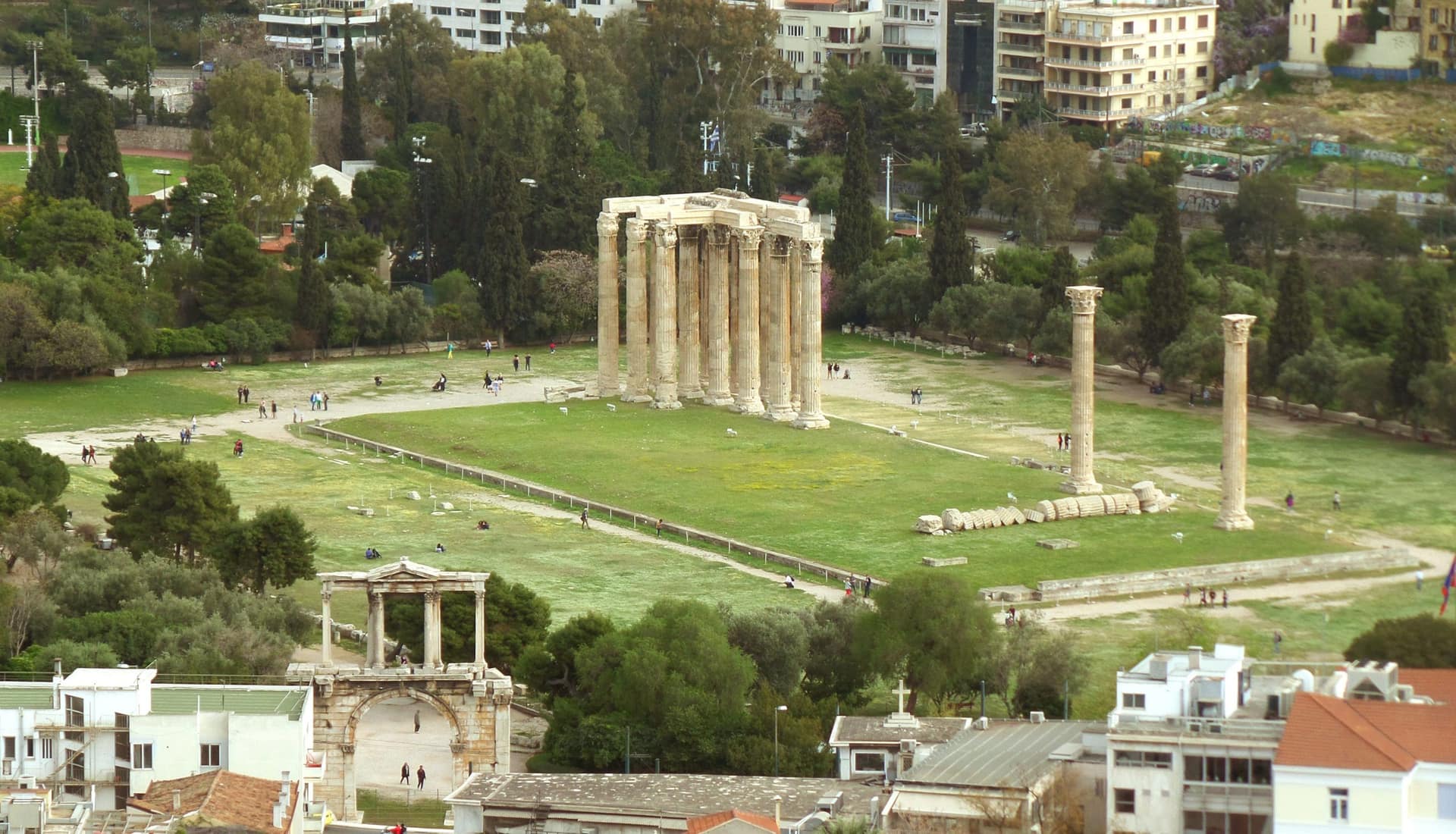
Olympieion/ Temple of Olympian Zeus/Hadrian's Gate
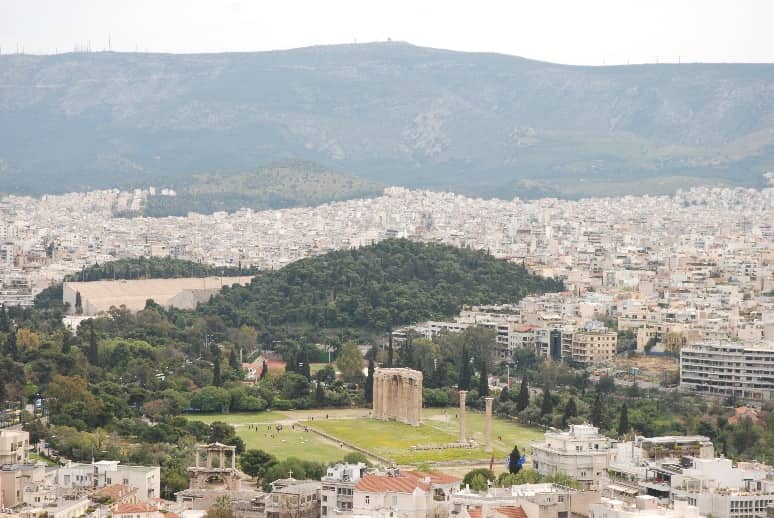
The Olympieion includes the Temple of Olympian Zeus, Roman baths, classical houses, a 5th century basilica, as well as part of the city’s fortified enclosure, while outside the fenced archaeological site is Hadrian’s Gate. The archaeological site of the Olympieion extends south-east from the Acropolis, in an area of 60 acres between the streets of Vasilissis Olgas Avenue to the north, Amalias Avenue to the west, Athanasios Diakos Street to the south and the Tennis Club.
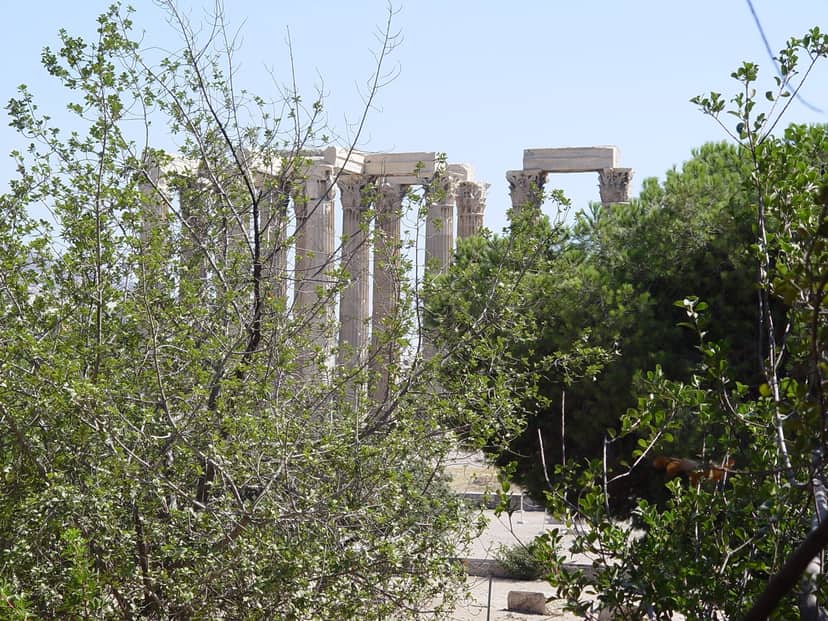
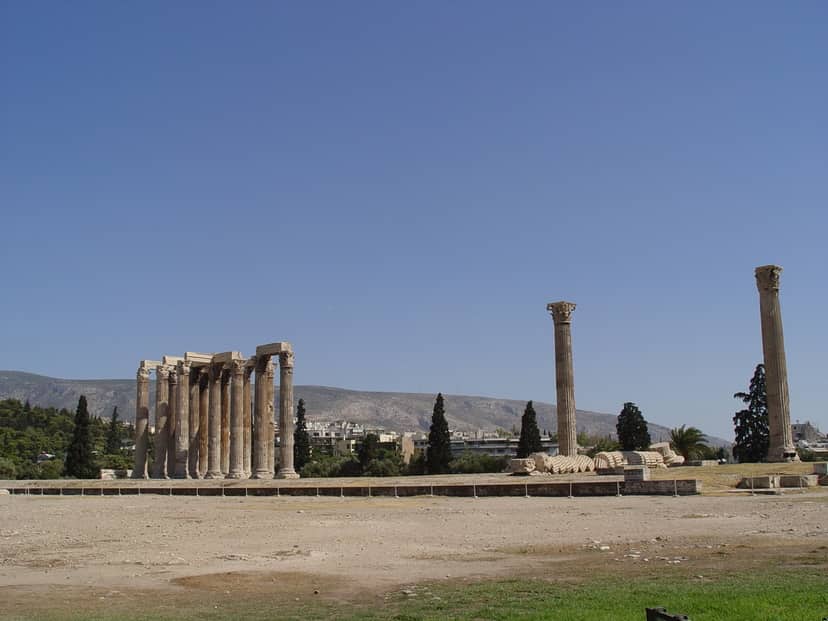
The construction of the temple was continued by the Seleucid king Antiochus IV Epiphanes, with the Roman architect Decimus Cossutius, in 175 BC, with the same dimensions and proportions as the archaic one, but in marble, in the Corinthian style, later than Augustus, and was finally completed by the Philhellenic emperor Hadrian, who inaugurated it in 131-132 AD. The Temple of Hadrian, one of the largest in the ancient world, Corinthian style, was 110.35 m long, 43.68 m wide, with two rows of 20 columns on the long sides and three rows of 8 columns on the narrow sides. It stood in the center of a large rectangular enclosure with a propylon to the north. The cella contained two oversized chryselephantine statues of Zeus and the Emperor Hadrian, which were venerated as symbols, while a multitude of statues and votive offerings adorned the area. The ruin began in the 5th century AD and continued in the following centuries due to natural causes or human intervention. In the SE area of the precinct there was an open-air mosque during the Turkish occupation and on the portico of the columns of the SE corner of the church there was a medieval building, perhaps an observatory. Of the 104 columns of the temple, sixteen were preserved until 1852. In that year one of them was blown down by a terrible storm.
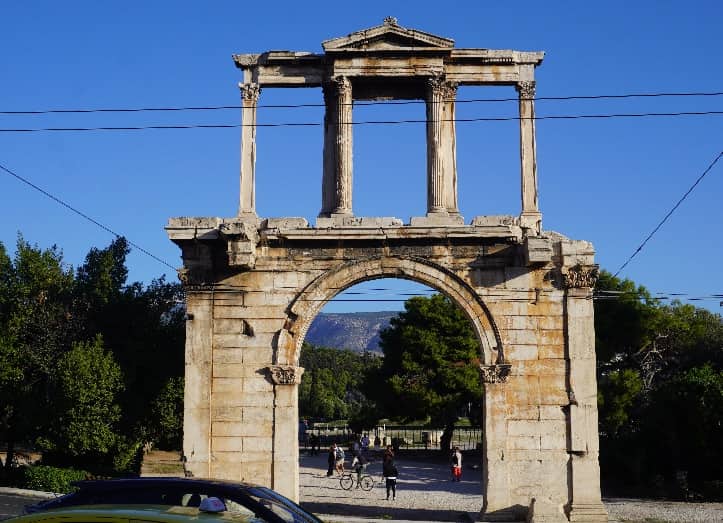
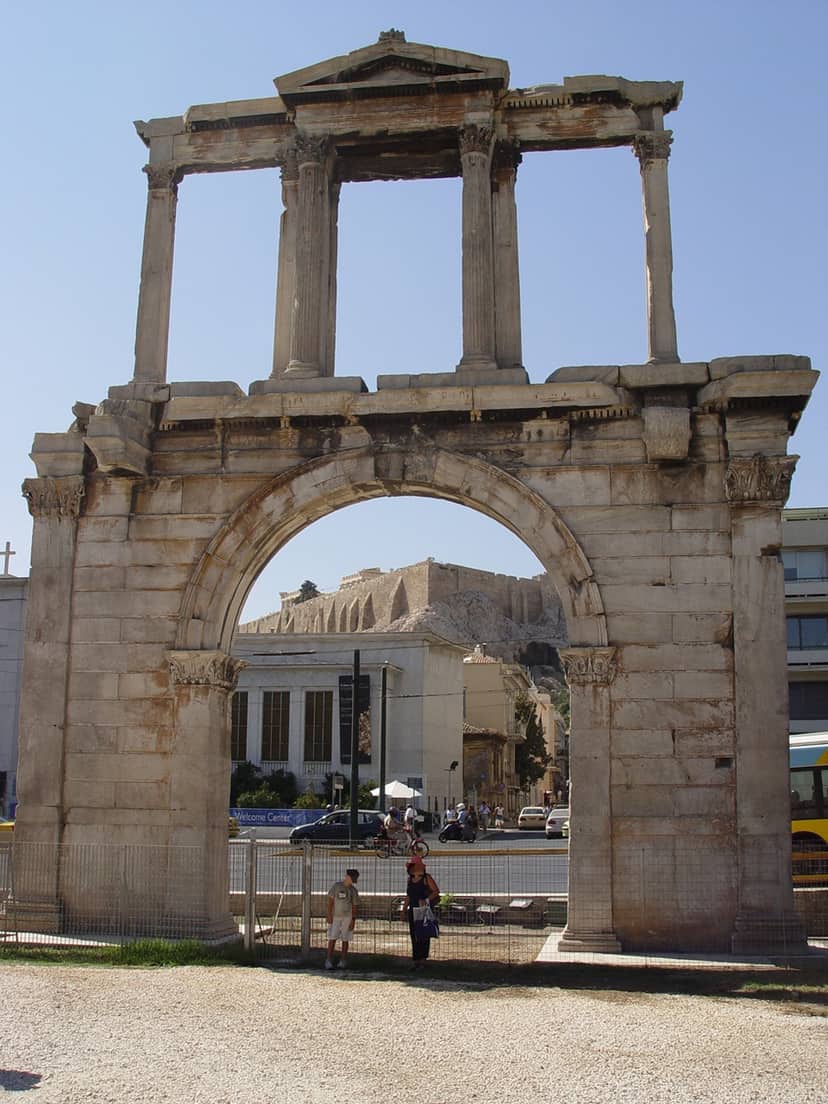
The monument, 18 meters high and 13 meters wide, has two identical facades and is divided vertically into two distinct sections. The lower part follows the Roman form of the triumphal arch, while the upper part imitates the traditional Greek propylon. In the portico above the arched passage are the inscriptions, on the western side: “This is Athens, the ancient city of Theseus” and on the eastern side: “This is the city of Hadrian and not of Theseus”.
In 1778, the arch was incorporated into the eastern part of the Turkish fortifications of Athens, known as the “Haseki Wall”, at which point it was turned into a gate, known as the “Queen’s Gate” or “Kamaroporta”.
The Olympieion includes the Temple of Olympian Zeus, Roman baths, classical houses, a 5th century basilica, as well as part of the city’s fortified enclosure, while outside the fenced archaeological site is Hadrian’s Gate. The archaeological site of the Olympieion extends south-east from the Acropolis, in an area of 60 acres between the streets of Vasilissis Olgas Avenue to the north, Amalias Avenue to the west, Athanasios Diakos Street to the south and the Tennis Club. The construction of the temple was continued by the Seleucid king Antiochus IV Epiphanes, with the Roman architect Decimu…
On the map
Experience Attica
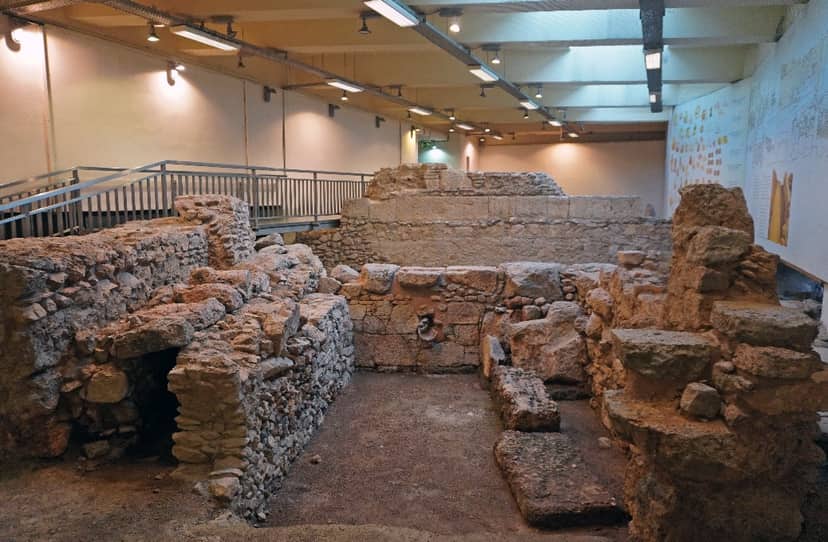
Monastiraki Metro Station- Eridanos River
Monastiraki metro station is historical and one of the oldest on the Piraeus-Kifissia line. It was inaugurated on May 17, 1895…