

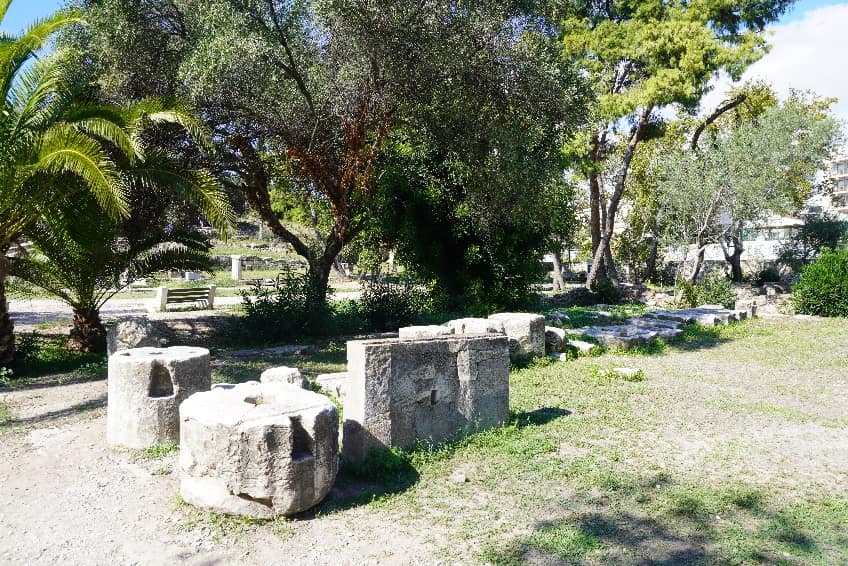
Temple of Ares
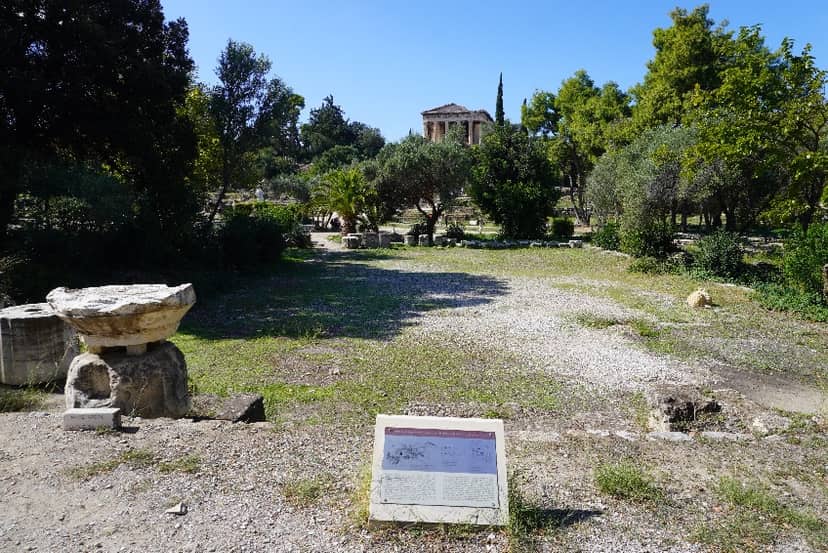
Other opinions (that the temple was located in a part of the city or even the Agora) are completely unsupported. The relocation of the temple and its dedication to Mars is clearly linked to the cult of the imperial family: Augustus’ grandson Gaius, who was very popular in the East, was worshipped in Greece under the nickname “New Ares”, as attested by an inscription from the 2nd century AD, possibly related to the rededication of the temple (IG II² 3250). This identification undoubtedly gave impetus to the worship of Mars in the Eastern Roman Empire, along with the fact that one of the deities that Augustus promoted in Rome itself was Mars Ultor. The transference theory is based on the fact that many of the 200 surviving architectural elements of the superstructure (recognizable by the characteristic Pentelic marble with veins of grey-greenish chlorite), found in a wide radius around the Agora, have been preserved with engraved masonry markers, which guided the Roman masons as to the position they should take when reassembling the temple. Of the four surviving column drums, one was found close to the temple, a second at the south-eastern end of the agora (now incorporated into the restored southern column in the pronaos of the Hephaisteion), while two others were later used as millstones. Since architectural elements from all parts of the temple have been found (triglyphs, capitals, epistyle, marble roof tiles, etc.), we can safely deduce its design and style. The Sima from the Temple of Poseidon at Sounion was discovered in the same area. It seems that it was brought here to be placed in the Temple of Ares.
The temple is a characteristic example of late 5th century BC Athenian architecture. According to Dinsmoor, it is one of the four surviving works of the so-called “Hephaisteion Architect”, and his third work in chronological order, as it is dated 436-432 BC, in the middle of the Periclean Building Programme. The other three temples are (in the chronological order proposed by Dinsmoor) the Hephaisteion (449-444 BC), the Temple of Poseidon at Sounion and finally the Temple of Nemesis at Ramnous (432 BC). The Temple of Ares is more similar to the Hephaisteion in terms of design and construction.
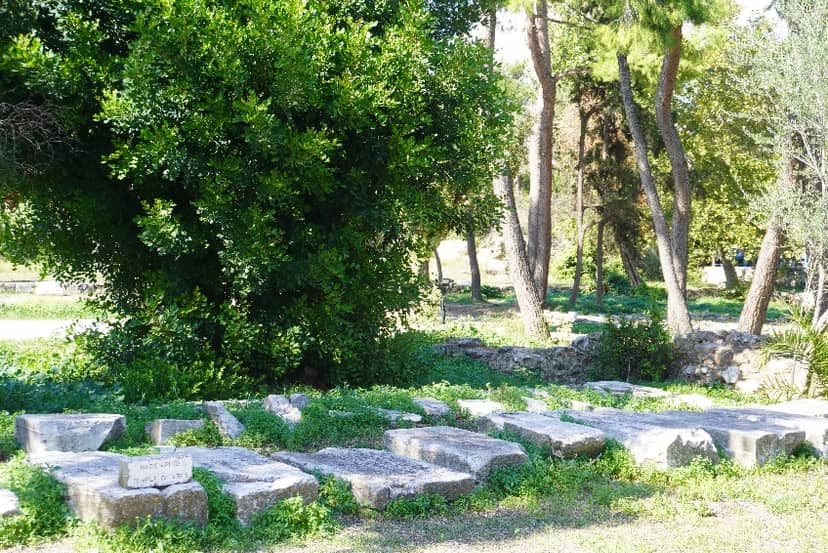
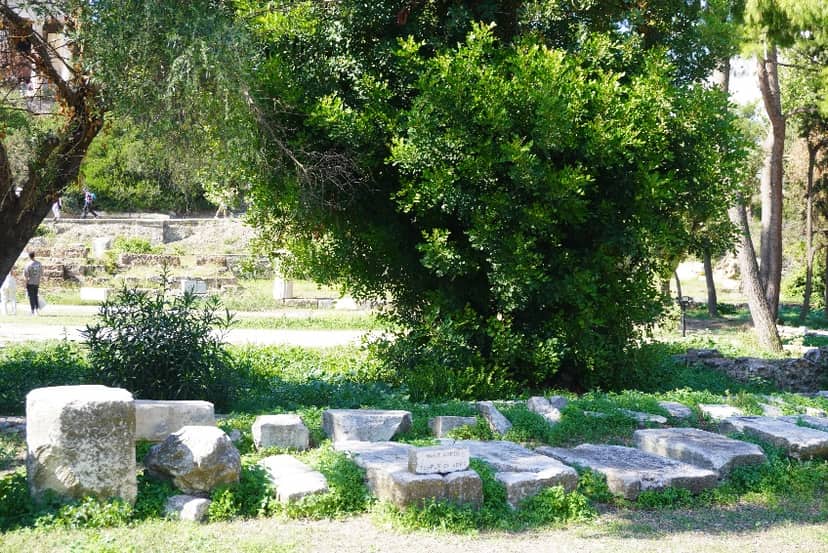
Although the lower part of the pediments had been reinforced to allow the placement of sculptures, there are no traces of sculptural decoration on the surviving fragments. A fragmentary marble sculpture – an akroterion – may have come from the temple; parts of it were found when a trench was opened for the suburban railway in 1891, but also during the 1951 excavations. It shows a female figure without wings, moving towards the observer. The Temple of Ares was destroyed during the Heruli raid on Athens in 267 AD. Substantial parts of the Pentelic marble superstructure were incorporated into the late Roman defensive wall. Apparently the structure was not completely destroyed, as it was partially incorporated into the late Roman villa (or gymnasium) of the 5th century AD. The foundation of the Altar of Ares, about 10 metres from the temple’s facade, is all that remains of the monument today.
Other opinions (that the temple was located in a part of the city or even the Agora) are completely unsupported. The relocation of the temple and its dedication to Mars is clearly linked to the cult of the imperial family: Augustus’ grandson Gaius, who was very popular in the East, was worshipped in Greece under the nickname “New Ares”, as attested by an inscription from the 2nd century AD, possibly related to the rededication of the temple (IG II² 3250). This identification undoubtedly gave impetus to the worship of Mars in the Eastern Roman Empire, along with the fact that one of the deit…
On the map
Experience Attica
Monastiraki Metro Station- Eridanos River
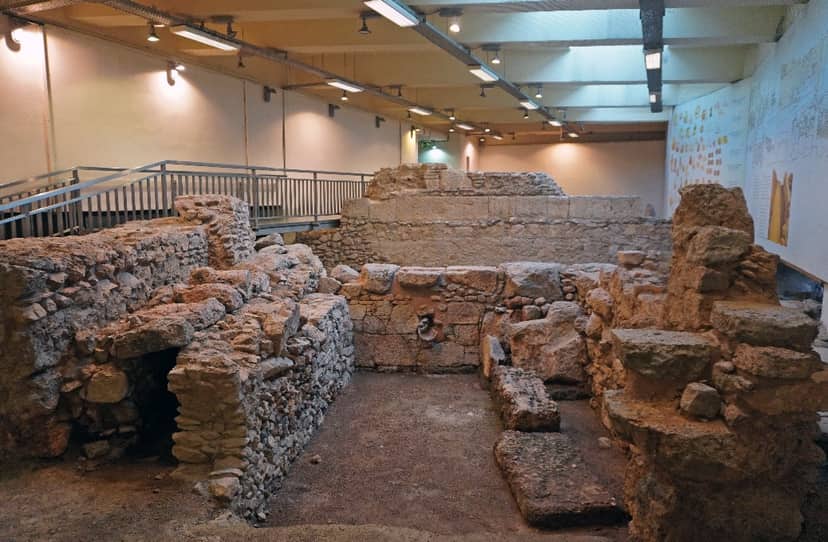
Monastiraki metro station is historical and one of the oldest on the Piraeus-Kifissia line. It was inaugurated on May 17, 1895…